The Story
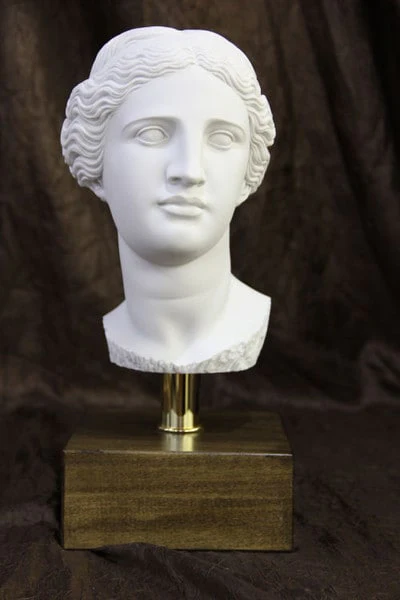
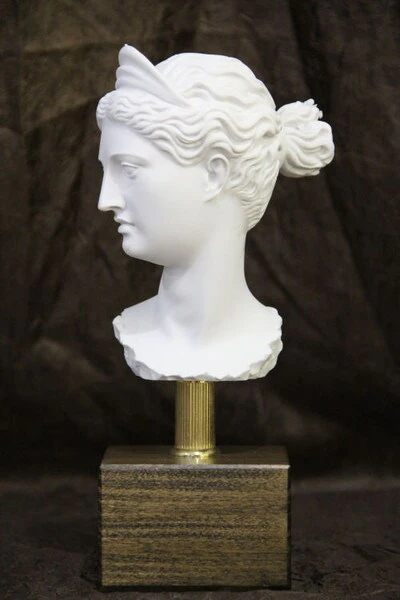
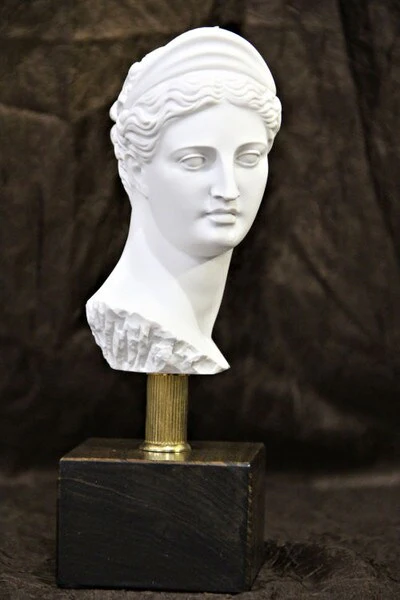
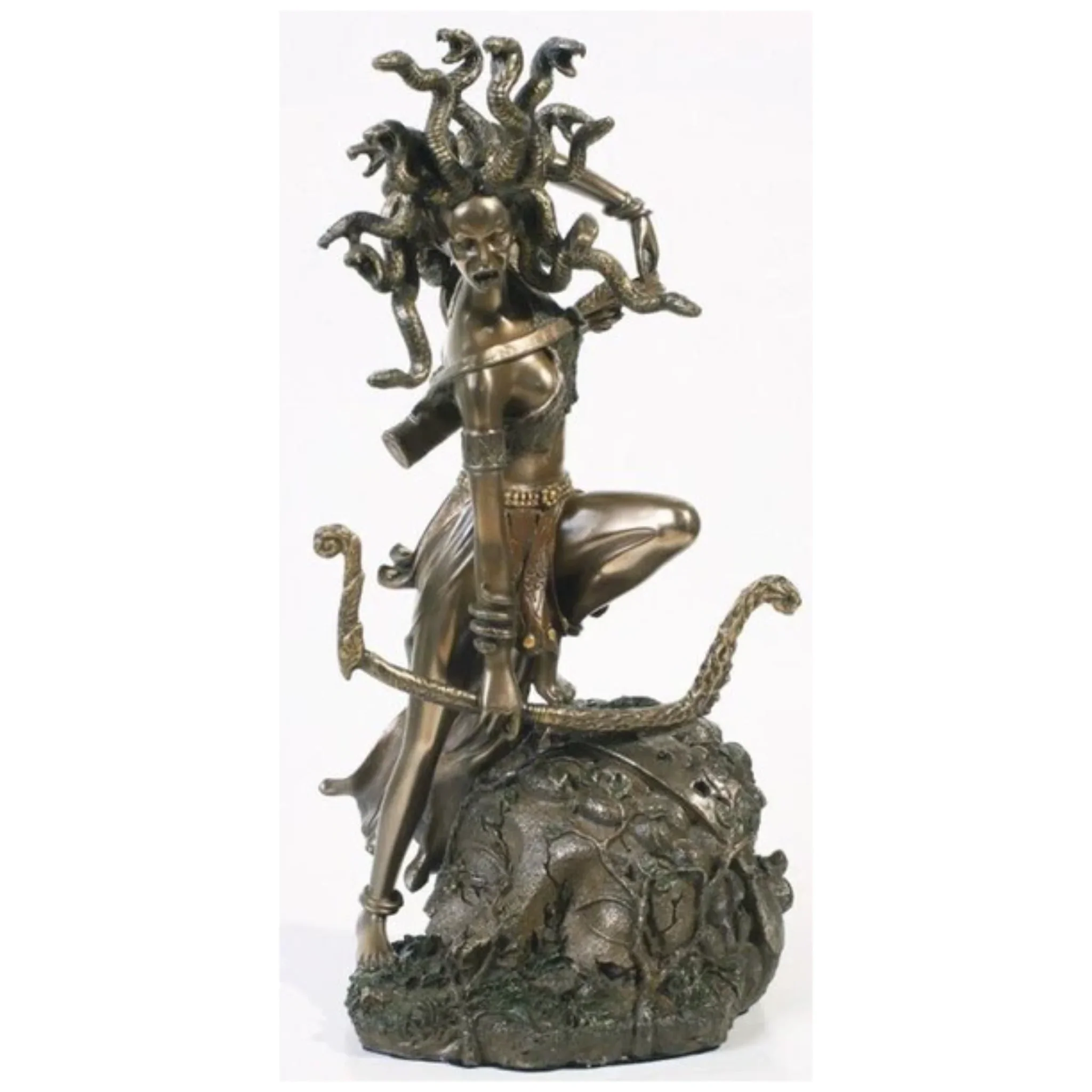
The story of Medusa has been told and retold with variations, either describing a hideous monster, so horrible an image that any glance at her would immediately turn the gazer to stone; to a tragic, beautiful woman who had been cursed by her own vanity. This striking sculpture, the Medusa Rondanini, depicts the latter interpretation of the myth, telling the story of a lovely woman who was admired for her glorious hair. Apparently it was her pride that betrayed her and enraged the goddess Athena, who transformed Medusa's locks and ringlets into a tangle of hissing serpents. A beautiful face expressing deep sorrow, this sculpture is believed to be a Roman copy of a Greek original from the 5th century BC, and is currently in Munich, Glyptothek 252. Her tragic life had a bloody end as the demigod, Perseus, was assigned the task of ridding the world of the deadly beast that Medusa had become. Outfitted by the gods themselves with a golden blade in the shape of a half-moon and the winged shoes of Hermes, Pluto's helmet of invisibility, and a shield of gold from Athena that was polished to such a high shine that it could be used as a mirror. With these divine instruments, Perseus successfully severed the head of his victim without looking directly at Medusa, which would have turned him (more...)
Description
The story of Medusa has been told and retold with variations, either describing a hideous monster, so horrible an image that any glance at her would immediately turn the gazer to stone; to a tragic, beautiful woman who had been cursed by her own vanity. This striking sculpture, the Medusa Rondanini, depicts the latter interpretation of the myth, telling the story of a lovely woman who was admired for her glorious hair. Apparently it was her pride that betrayed her and enraged the goddess Athena, who transformed Medusa's locks and ringlets into a tangle of hissing serpents. A beautiful face expressing deep sorrow, this sculpture is believed to be a Roman copy of a Greek original from the 5th century BC, and is currently in Munich, Glyptothek 252. Her tragic life had a bloody end as the demigod, Perseus, was assigned the task of ridding the world of the deadly beast that Medusa had become. Outfitted by the gods themselves with a golden blade in the shape of a half-moon and the winged shoes of Hermes, Pluto's helmet of invisibility, and a shield of gold from Athena that was polished to such a high shine that it could be used as a mirror. With these divine instruments, Perseus successfully severed the head of his victim without looking directly at Medusa, which would have turned him (more...)